STELLA
Smart Travel Experiences Leading Local Adventures
Lead Product Designer • Expedia Group • 2024 • 3-6 months
What if discovering a new city felt less like following a tour group and more like exploring with a knowledgeable local friend?
The Challenge
89% of travelers want guided experiences, but traditional tours force an impossible choice: depth or freedom. Rigid schedules, groups of 25-50 people, and no room for questions create friction at every step.
I led design for this 0-1 product initiative, reimagining walking tours as AI-powered, self-guided experiences that adapt to each traveler's pace and curiosity.
Key Constraints:
- Integrate with existing Expedia infrastructure
- Real-time location accuracy and AI voice quality limitations
- 3-6 month timeline to validate and ship MVP
Research Insights
A critical insight: travelers book tours months in advance, but their interests change when they arrive. Someone who books a "highlights of Rome" tour might discover a passion for ancient architecture—but group tours don't allow for that flexibility.
70%
of travelers want guided tours
80%
of Gen Z travelers prioritize authentic experiences
81%
of Millennials seek local cultural immersion
89%
want local guide experience without group constraints
Core User Needs
- Flexibility — Explore at their own pace, linger or skip freely
- Depth — Context and stories beyond Wikipedia
- Confidence — Clear wayfinding in unfamiliar cities
- Authenticity — Local recommendations only insiders know
Design Approach
Guiding Principles
"Invisible until needed"
Location-awareness that feels magical, not intrusive.
"Conversation, not narration"
AI that adapts to questions and responds contextually.
"Serendipity by design"
Structure for confidence, flexibility for discovery.
Key Design Decisions
Decision 1
Two Entry Points
The Decision: Support both pre-planning (Trips integration) and spontaneous discovery (location-based triggers).
Why: Data showed a 60/40 split between meticulous planners and spontaneous explorers. Rather than compromise, serve both.
Tradeoff: Added complexity, but validated through testing that both paths were essential for adoption.
Decision 2
AI-Powered Audio
The Decision: Invest in real-time AI-generated audio instead of pre-recorded content.
Why: Users abandon static audio tours after 10 minutes. They can't ask questions, skip ahead, or dive deeper into what interests them.
Result: Natural conversation—ask "What happened here during WWII?" and get contextual responses.
Decision 3
Visual Wayfinding
Evolution: Started with text directions, evolved to map-based navigation with AR confirmation.
Why: Travelers navigating foreign cities struggled to match street names with surroundings. Visual cues reduced navigation errors by 40%.
Enhancement: Camera recognition as fallback—point at a building, STELLA confirms location and adds context.
The Experience
Sarah's in Paris for the first time. After seeing the Eiffel Tower, she checks her Expedia app. STELLA suggests a Louvre tour tailored to her interest in Renaissance art—45 minutes, focused on masterpieces.
She taps "Start Tour." A warm AI voice greets her: "Welcome to the Louvre. Let's explore the world's most famous artworks." As she walks through the galleries, the map guides her visually while audio brings each piece to life.
At the Mona Lisa, she's curious about da Vinci's technique. "Tell me about the sfumato technique," she asks. STELLA responds with specific details about the painting method and shows related works.
She points her camera at a sculpture. STELLA identifies it instantly: "This is the Winged Victory of Samothrace, circa 200 BC"—then shares its discovery story. By tour's end, she's seen exactly what she wanted, at her own pace, with depth no guidebook could provide.
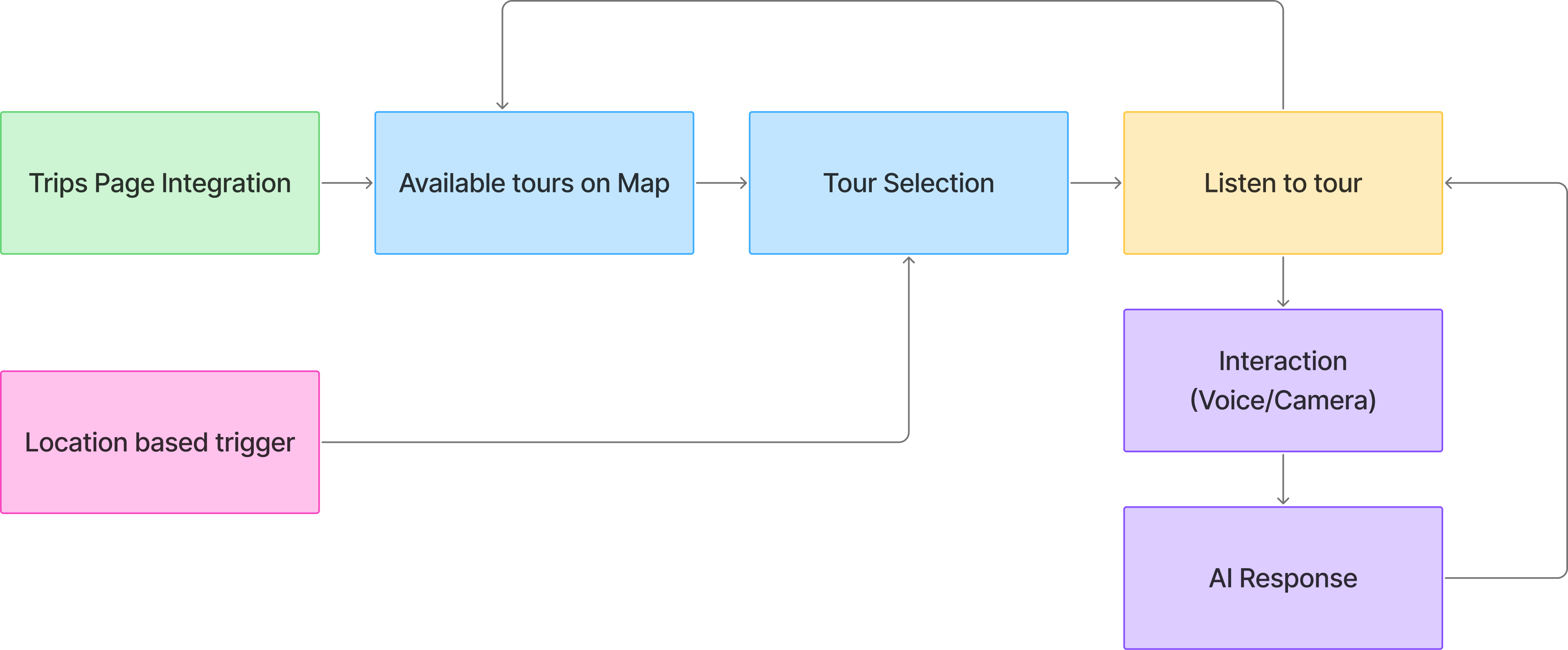
End-to-end user journey showing both entry points and key interaction moments.
Interface Design
Two Entry Points
Pre-trip planning through Trips integration and in-moment discovery through location-based notifications—designed to serve different traveler behaviors.

Contextual notification when near tour starting points
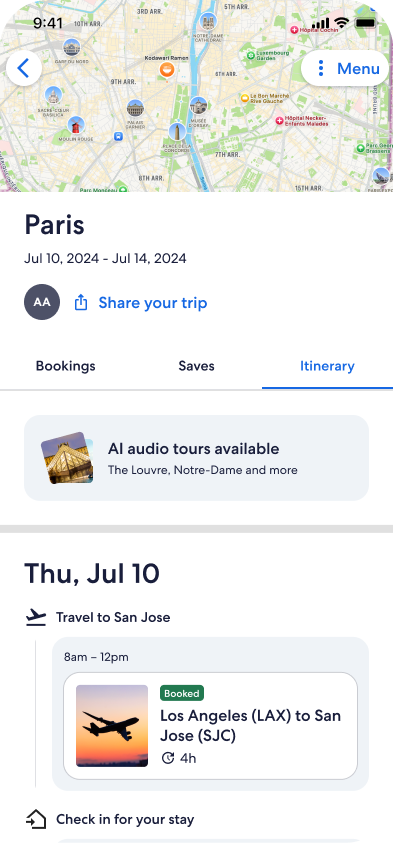
Proactive tour suggestions based on upcoming travel dates
Visual Wayfinding
Map-based navigation that reduces cognitive load. Clear visual hierarchy, upcoming stops, and point-of-interest details designed for confident exploration.
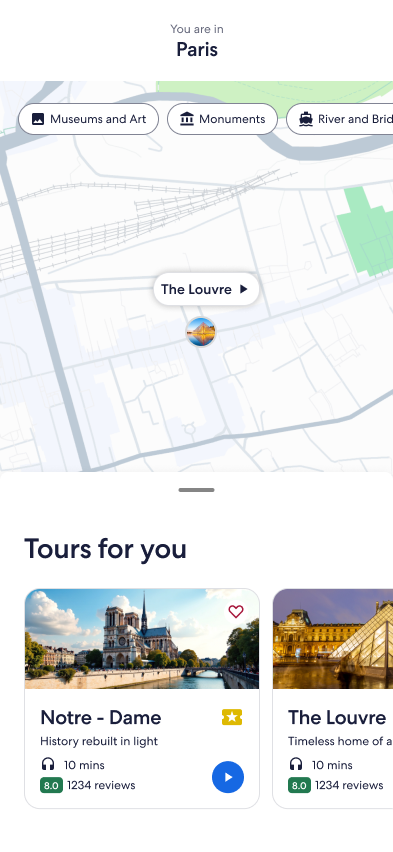
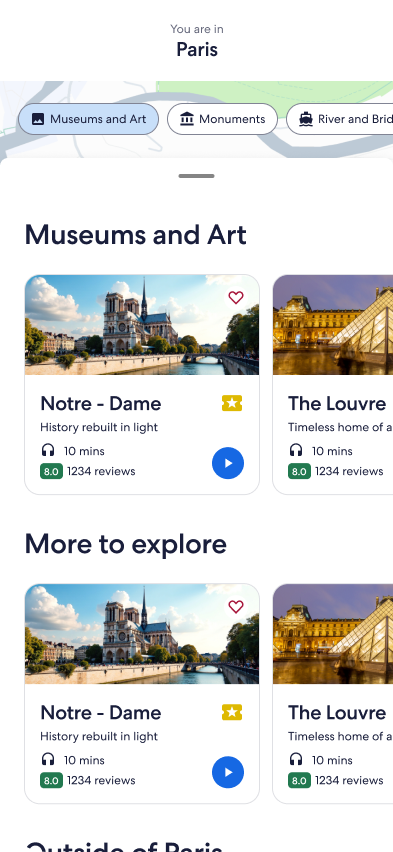
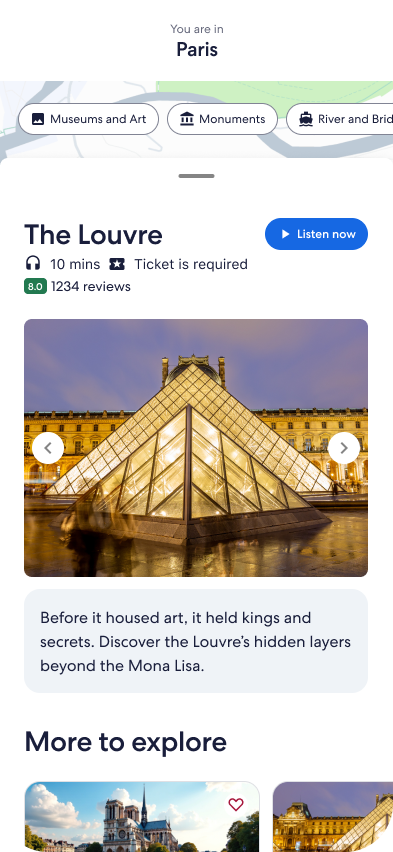
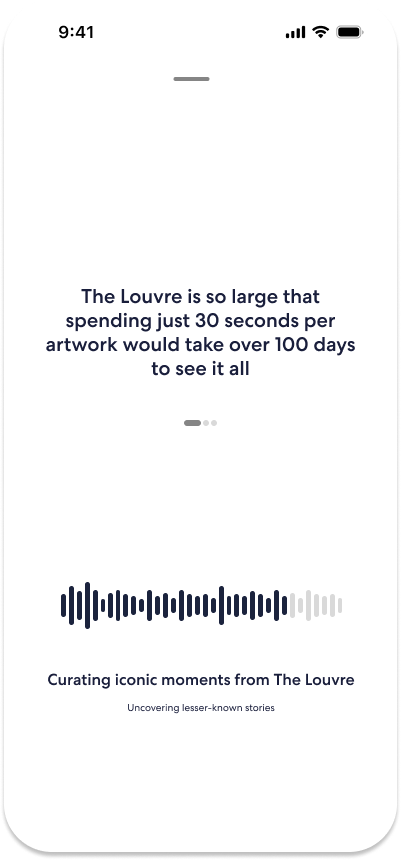
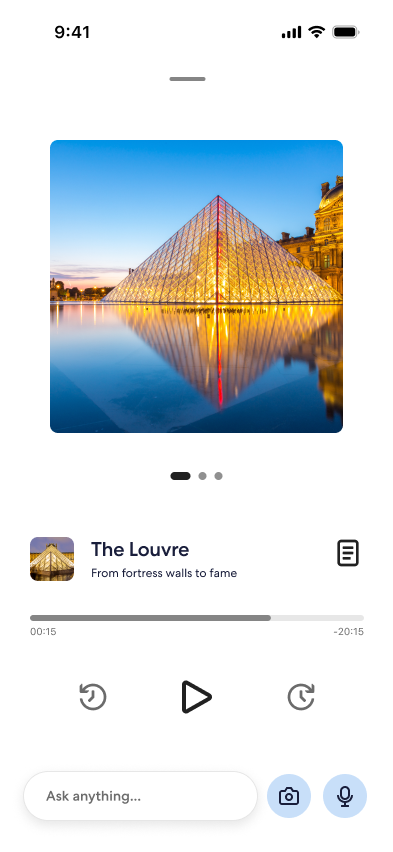
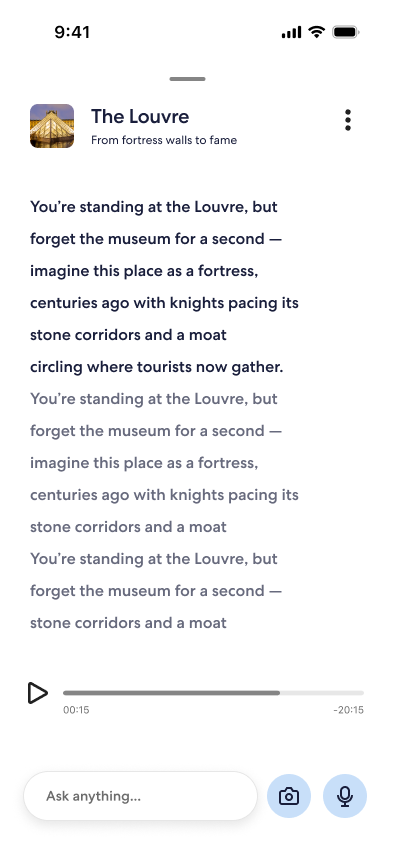
Conversational Audio
AI-powered audio with transcription, playback controls, and visual feedback. Designed to feel like conversation, not narration.
Multimodal Intelligence
Context-aware Q&A and camera recognition for deeper exploration. Ask questions naturally, get instant answers tailored to your location.
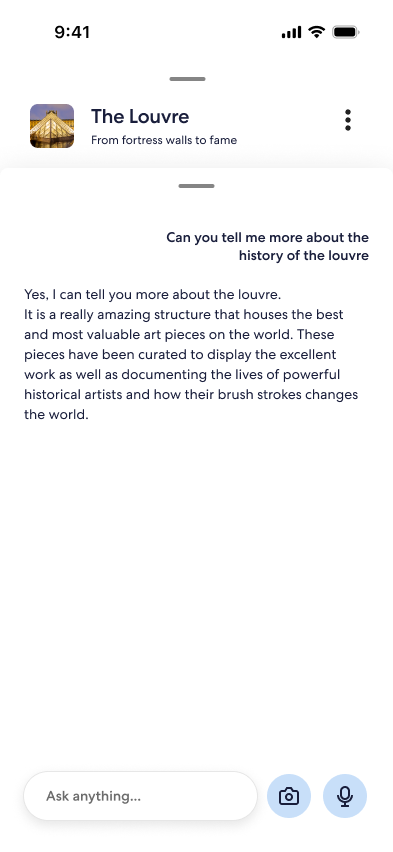
Natural language Q&A adapts to context and history

Point at landmarks for instant identification and stories
Impact & Recognition
Current Status
STELLA is being tested on the Expedia app with selected users. Continuous updates are being implemented based on user feedback to refine the experience and validate core assumptions.
Innovation Recognition
The core technology and interaction model behind STELLA is undergoing patent recognition and acceptance, validating the novelty of the approach to AI-powered, location-aware guided experiences.
Strategic Impact
- • New Experience Category: Positioned Expedia beyond bookable tours into intelligent travel companions
- • Revenue Opportunity: Created upsell pathway for Expedia's Activities line of business through seamless in-app tour discovery
- • AI Foundation: Established patterns and infrastructure for future AI-powered travel products
- • Design System: Created reusable components for location-aware experiences and conversational AI interactions
Key Learnings
What Worked
- Two-entry-point strategy validated both planner and explorer user segments
- AI voice quality exceeded expectations—conversational tone drove engagement
- Starting narrow (walking tours only) allowed focus on core experience quality
What I'd Do Differently
- Earlier in-destination testing with real tourists navigating foreign cities
- Prioritize offline functionality from day one for international travelers
- Include non-English speakers in initial research to catch localization challenges sooner
Core Insights
- Serendipity needs structure. The most spontaneous-feeling experiences require careful systems design.
- AI changes everything. Edge cases, error states, and user control need rethinking for AI-powered interfaces.
- Context is critical. What works in a quiet museum fails on a busy street—build flexibility into the design.